
Miriad Insight · Miriad LLC
Mobility technology becomes useful when it turns scattered information into timely, practical context.
More signals do not always mean more certainty
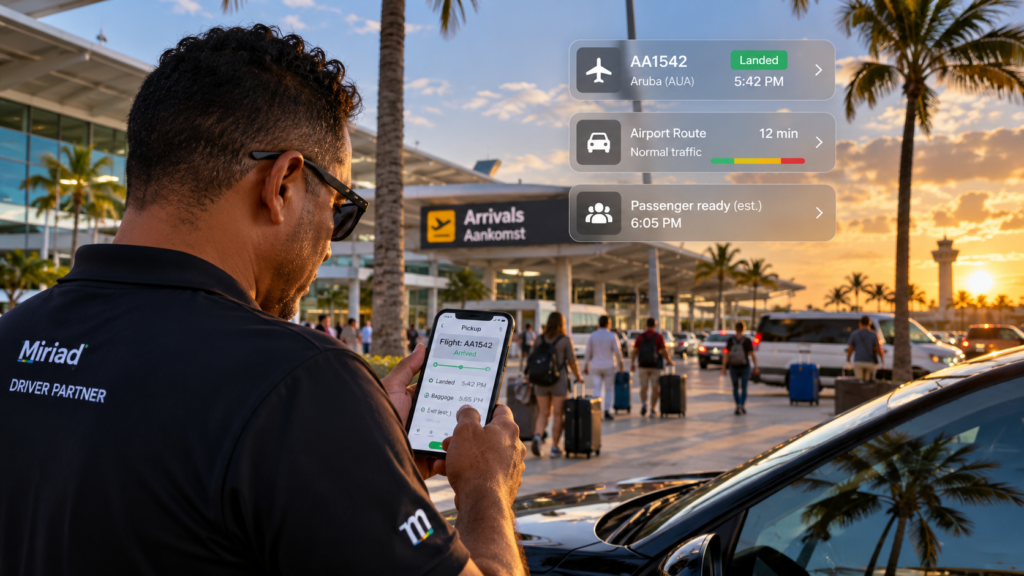
At an airport pickup, a flight can be marked landed while the guest is still walking through the terminal. Traffic can change while the driver is deciding when to approach. A hotel can know a transfer was requested without knowing whether the pickup has been acknowledged.
None of those signals is useless. None, by itself, tells everyone what to do next.
More data is often offered as the answer to uncertainty. But another feed can also mean another screen to watch, another timestamp to interpret, and another message to reconcile. The work does not become easier simply because more information exists.
Context turns information into a useful next step
The better question is not “What else can we measure?” It is “Which decision needs to be made, by whom, and when?”
A driver needs to know whether to wait, approach, or contact the guest. A hospitality team needs to know whether the pickup is confirmed and when to prepare the guest. A dispatcher needs to see where a handoff needs attention. The same event can matter differently to each person.
Useful intelligence connects a signal to the job it affects. It puts an update beside the pickup, gives it a clear time and meaning, and helps the right person act. It does not remove professional judgment. It gives that judgment better context.
Information becomes intelligence when it helps someone make the next decision.
This is also why technology should be designed around the way people already work. As we argued in our earlier Miriad Insight on practical innovation, improving a workflow begins with understanding it.
A pickup becomes clearer when updates follow the handoff
Consider a guest arriving for a resort transfer. A landed flight is an important update, but it is not the same as a guest ready at the pickup point. Baggage, walking time, traffic, and the agreed meeting location can still affect the next step.
If each detail lives in a separate conversation, the driver, hotel, and dispatcher may each hold a different picture of the same pickup. They spend time checking status instead of coordinating the service.
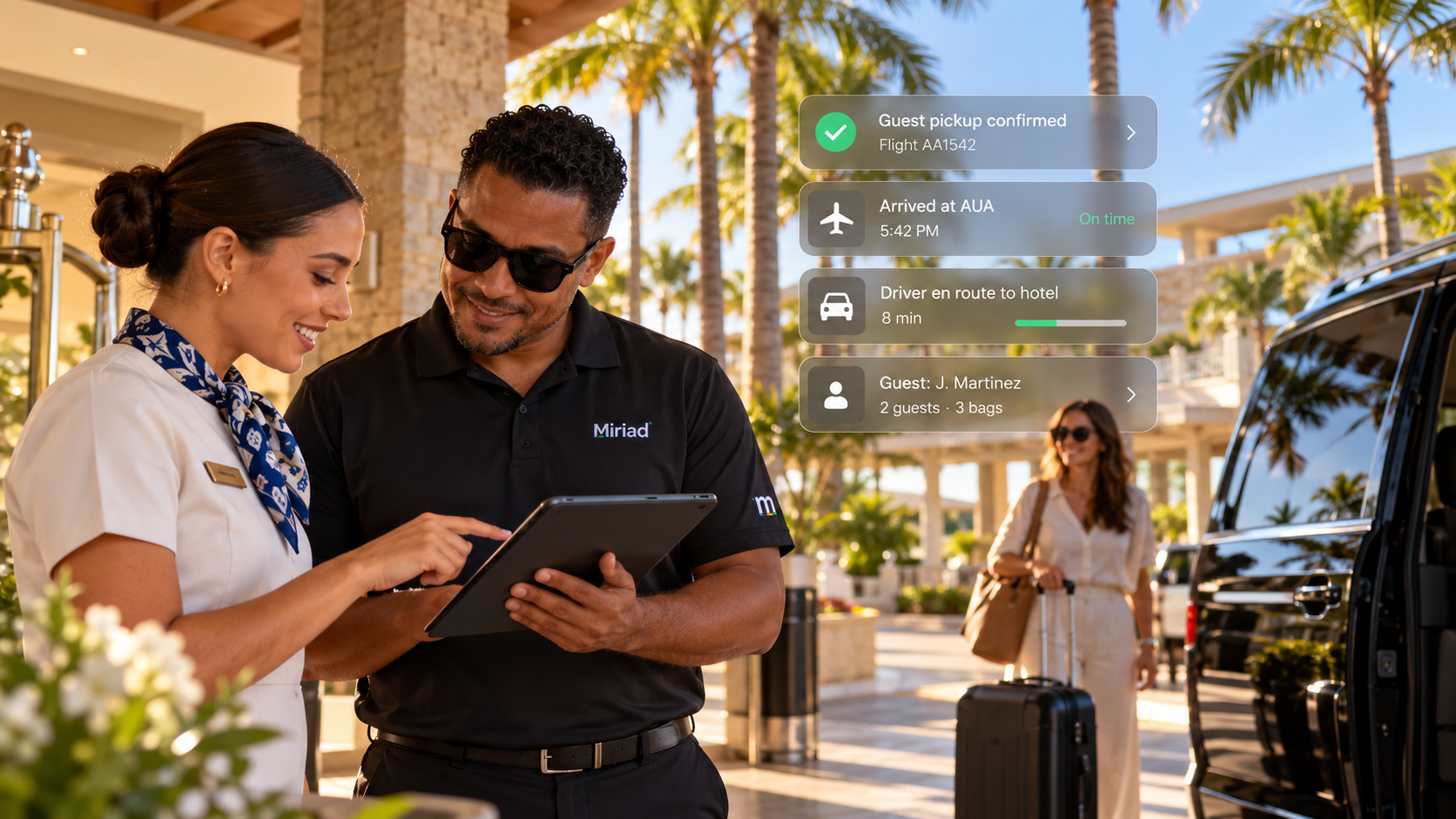
A clearer workflow attaches updates to the pickup and makes the next action visible: the guest is being prepared, the driver is on the way, or the meeting point needs clarification. Those are practical states, not just more numbers. They help people coordinate without requiring everyone to monitor everything.
A useful status changes a handoff. It does not merely add another notification.
Better intelligence should support human judgment
At Miriad, we see mobility intelligence as a way to make real work more legible. The aim is not to turn every driver, dispatcher, or hospitality partner into a dashboard operator. It is to help each person see the information relevant to their responsibility, at a moment when it can still improve the experience.
That perspective informs our broader connected-mobility work: clearer handoffs, understandable records, and tools that respect the people already serving the journey. A system is useful when it reduces avoidable checking while leaving room for local knowledge and professional choice.
Good mobility technology should not ask people to monitor more. It should help them decide better.
Where should mobility intelligence reduce work first?
Mobility intelligence is most useful when it reduces unnecessary monitoring and helps people make better decisions. If you work in transportation, hospitality, tourism, or mobility technology, we would like to hear where you see the biggest opportunity to turn scattered information into practical intelligence.